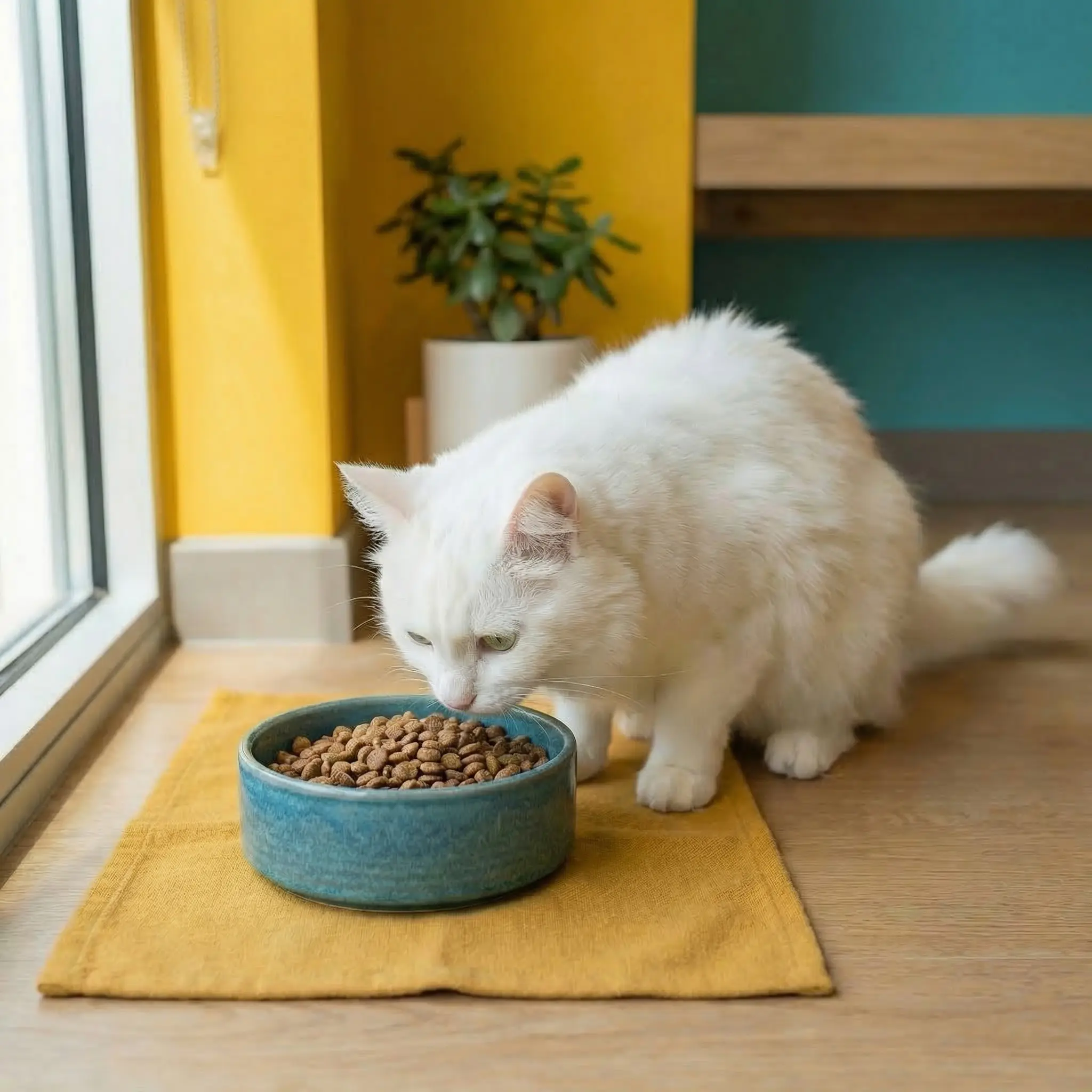
Your cat's nutritional needs aren't static. A six-month-old kitten and a ten-year-old senior cat might both be eating "cat food" — but what's right for one can actually be inadequate, or even harmful, for the other. Life stage nutrition is one of the most straightforward ways to support your cat's long-term health, and it's something we talk about at almost every wellness visit.
Here's a simple breakdown of what to look for at each stage.
Kittens (Under 12 Months)
Kittens grow fast — dramatically fast. In their first year of life they need roughly twice the calories per kilogram of body weight as an adult cat, along with specific nutrients their developing bodies can't produce on their own.
Look for a kitten food that provides:
- High protein (at least 30% on a dry matter basis) to support rapid muscle development
- DHA, an omega-3 fatty acid essential for brain and eye development
- Calcium and phosphorus in the right ratio for healthy bone growth
- Higher calorie density overall — kittens have small stomachs and big energy needs
Look for a food labelled "for kittens" or "for all life stages" — these meet AAFCO growth standards, which are more demanding than adult maintenance standards. Avoid adult cat food during this stage; it simply won't provide enough of what a growing kitten needs.
Adult Cats (1–7 Years)
Once your cat passes their first birthday, the goal shifts from growth to maintenance: keeping their weight stable, supporting organ health, and preventing the most common adult health issues — obesity, dental disease, and urinary tract problems.
Key things to look for in adult cat food:
- Moderate, high-quality protein — look for a named animal source (chicken, salmon, turkey) as the first ingredient, not "poultry" or "meat by-products"
- Moisture content — wet food, or a combination of wet and dry, supports hydration and kidney health. Cats have a naturally low thirst drive and often don't drink enough water on a dry-only diet
- Appropriate calories — adult cats, especially those who are spayed or neutered, can gain weight easily. Portion control matters; follow feeding guidelines and adjust based on your cat's body condition
If your cat was spayed or neutered, some vets recommend transitioning to a "sterilised" or "light" formula around 12–18 months, as metabolic rate can drop by up to 30% after the procedure.
Senior Cats (7+ Years)
Cats age more gradually than dogs, but by around seven or eight years old, their nutritional needs begin to shift again. Senior cats often have a harder time digesting and absorbing nutrients, and they become more vulnerable to conditions that good nutrition can help delay or manage.
Senior-specific foods typically address:
- Digestibility — older cats may struggle with lower-quality protein sources; look for easily digestible, highly bioavailable protein
- Kidney support — reduced phosphorus is important because the kidneys are the most common organ to decline in senior cats, and a high-phosphorus diet accelerates that process
- Joint health — foods with added omega-3 fatty acids or glucosamine can help with the arthritis that many older cats experience
- Smaller, more frequent meals — if your senior cat's appetite or digestion has changed, splitting meals can help
Many vets recommend transitioning to a senior-specific food around age 7–8, even if your cat seems perfectly healthy. Proactive dietary support can meaningfully delay or prevent many age-related conditions.
How to Read a Pet Food Label
Pet food labels can be confusing. A few things that actually matter:
- "Complete and balanced" — this phrase on the label means the food meets AAFCO minimum nutritional standards for the stated life stage. It's the baseline you want.
- Ingredient order — ingredients are listed by weight before cooking. The first ingredient should be a named protein. If it's corn, wheat, or a vague "meat," keep looking.
- Grain-free — unless your cat has a diagnosed grain intolerance or allergy, there's no established benefit to grain-free diets. The research on grain-free diets and heart health in cats is still evolving, and we'd encourage talking to us before making the switch.
- Life stage labelling — "for all life stages" is generally fine for kittens and adults, but senior cats often benefit from food specifically formulated for their needs.
When in Doubt, Ask Us
Every cat is different. Body condition, activity level, health history, and individual pickiness all factor into what's actually the best choice for your cat. If you've noticed weight changes, a dull coat, digestive issues, or you're just not sure whether what you're feeding is the right fit, book an appointment and we'll review their diet together.
Nutrition is one of the most powerful tools we have for keeping cats healthy for as long as possible. It's always worth getting right.